
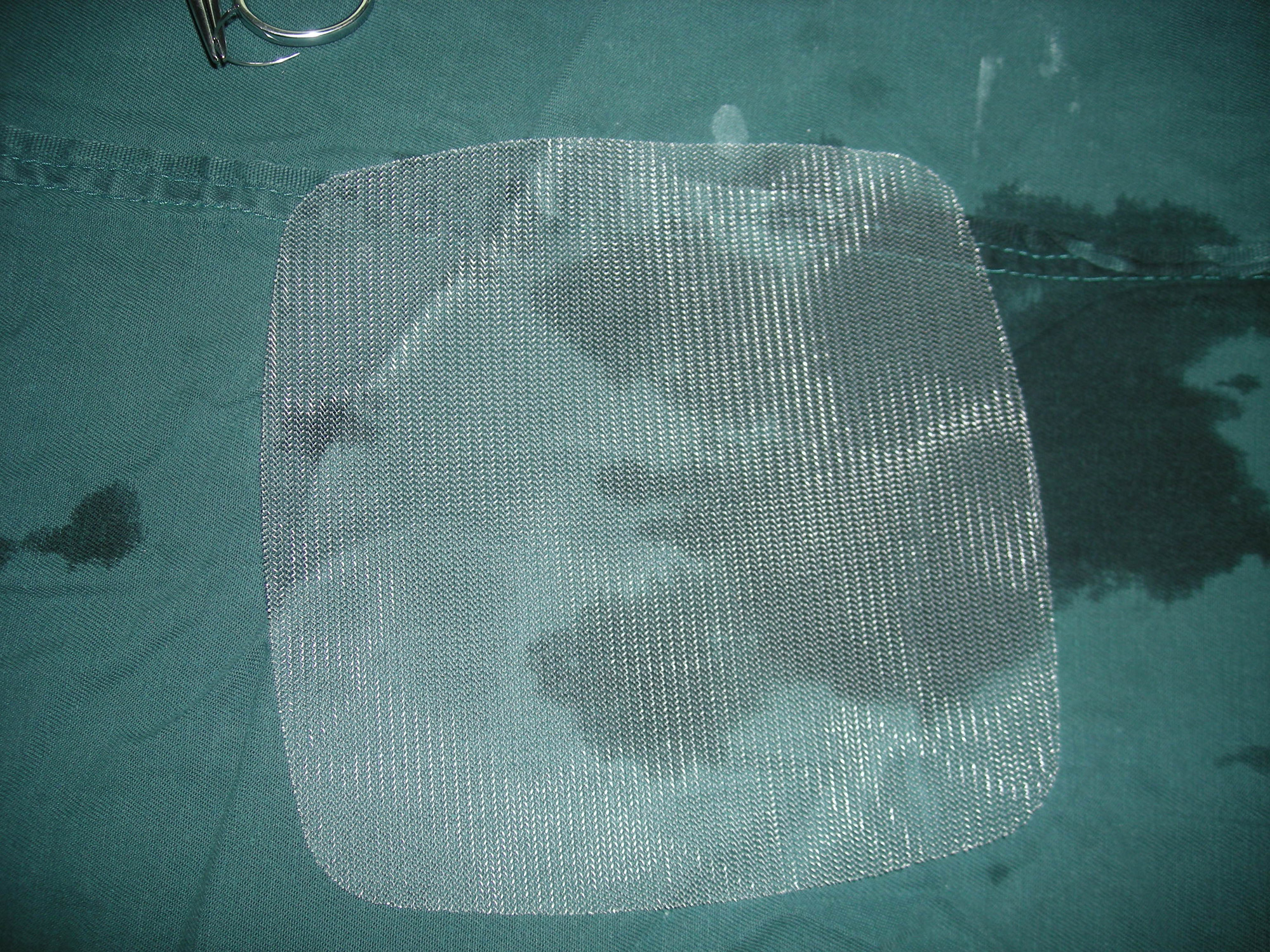
Several articles published in the general press in recent months have referred to a possible “health scandal” concerning the mesh used in hernia surgery. Here, I would like to take stock with you, in the light of the official position published by the learned societies of visceral and digestive surgery (SFCP-CH, AFC, SFCD, CNP-CVD).
Every year in France, more than 250,000 patients undergo surgery for a hernia of the abdominal wall, most often a groin hernia. It is the operation most frequently performed by a visceral surgeon during their career. The placement of a wall reinforcement mesh, recommended by the international learned societies, allows a tension-free repair and significantly reduces the risk of recurrence compared with a simple suture.
Like any surgical procedure, hernia repair is not without risk. Post-operative inguinal pain may occur in 5 to 10% of patients, and is disabling in 1 to 5% of cases. This pain is mainly linked to the surgical dissection itself and not, in the majority of studies, to the presence of the mesh: the risk of chronic pain is no higher with mesh than with a simple suture.
As regards the hypothesis of a syndrome of intolerance to prosthetic materials, to date there is no scientific demonstration of this phenomenon in the medical literature. The French experts in hernia surgery, who discuss difficult cases every month, have recorded no cases of it. The isolated publications reported in some media are most often based on single cases, without a sufficient level of evidence to call into question practices validated by numerous studies conducted in large populations.
The best prevention remains clear information given during the consultation, on the expected benefits as well as the potential risks of each technique, with or without mesh. This is a discussion we systematically have together before any decision to operate.
Dr Grégoire Deroide
Going further
To find out more about the surgical management of hernia, see the dedicated page: Hernia surgery.
See also: Inguinal hernia: why the laparoscopic approach (TEP) · Having hernia surgery without mesh

