The thyroid and parathyroid glands
The thyroid and parathyroids are endocrine glands that play an essential role in regulating the body by secreting hormones.
The thyroid is located at the base of the neck, in front of the trachea and below the larynx. It consists of two lobes joined by an isthmus, which gives it its characteristic butterfly shape. The four parathyroid glands are positioned in pairs, two at the back of each thyroid lobe.
Conditions that are usually treatable
The vast majority of thyroid conditions are treated effectively. Treatment options are medical or surgical; in some cases, lifelong hormone replacement therapy may be necessary.
Thyroid and parathyroid surgery is now a well-established procedure, considered safe and standardised.
When is thyroid surgery needed?
Surgery may be recommended in the following situations:
- Graves’ disease.
- A simple goitre.
- The presence of one or more thyroid nodules.
- Thyroid cancer.
A cutting-edge technique: transoral thyroidectomy
Some thyroid conditions can now be treated surgically via the transoral route: a minimally invasive endoscopic approach that is still unprecedented in France, performed by Dr Grégoire Deroide.
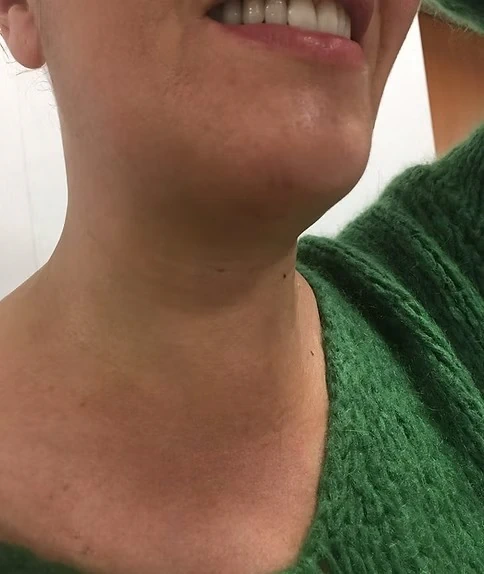
This technique, known as TOETVA (Transoral Endoscopic Thyroidectomy Vestibular Approach), involves operating from inside the mouth, with no visible incision on the neck. Imported from Thailand, it was developed in Asia, notably to preserve the fertility meridian, a concept from traditional Asian medicine, and thus to protect women against the risk of infertility associated with neck scars.
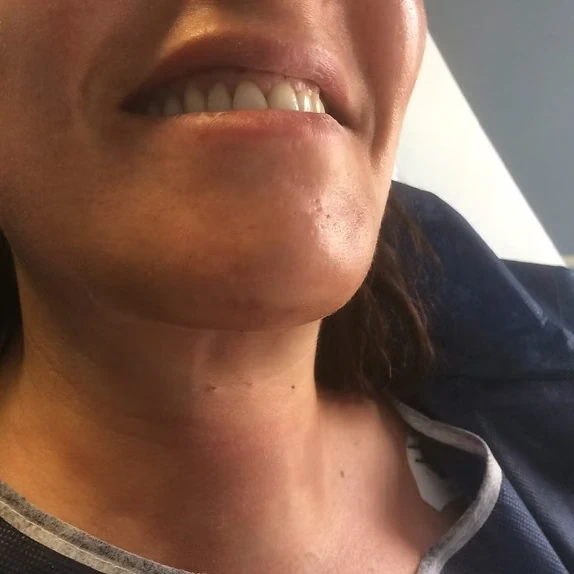
Its main advantage: no visible scar
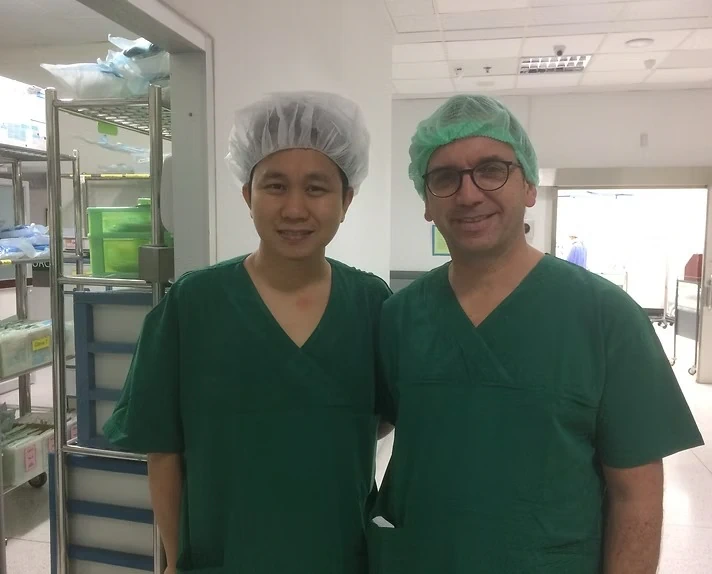
Convinced of the clinical and cosmetic benefits of this approach, Dr Deroide trained directly with its inventor, Dr Angkoon Anuwong of the Police General Hospital in Bangkok, a pioneer of the technique worldwide, with thousands of transoral thyroidectomies performed since 2016.
Drawing on this expertise, unique in France, Dr Deroide now offers this procedure at the Franco-British Hospital and at Clinique Ambroise Paré, with nearly 400 cases performed to date.
How is the procedure performed?
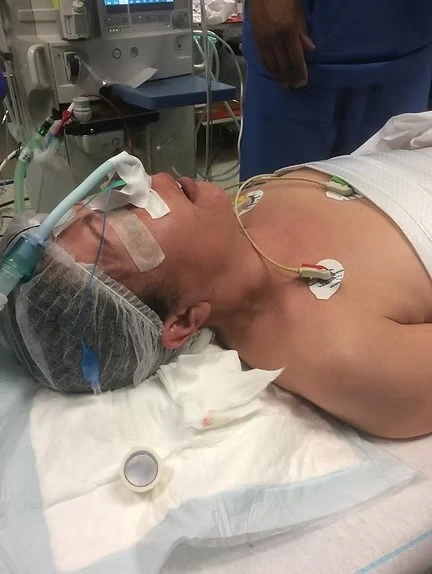
Transoral thyroidectomy is performed under general anaesthesia. The surgeon makes three small incisions between the lower lip and the gum, through which the trocars are inserted into the chin muscle: one holds the endoscope, the other two the surgical instruments.
This approach gives a remarkable view of the operating field, allowing the surgeon greater precision and better preservation of the adjacent parathyroid glands and recurrent nerves, structures that are particularly important to protect in any thyroid surgery.
Compared with the da Vinci robot-assisted transaxillary approach, the TOETVA technique considerably shortens the access route and is much less expensive, with no compromise on the quality of the surgical procedure, Dr Deroide points out.
Risks and patient eligibility
In terms of risks, this approach is comparable to conventional thyroidectomy. It is specifically intended for patients with isolated nodules or goitres whose diameter does not exceed 6 cm.
However, this technique is contraindicated in certain situations:
- Previous neck surgery that may have left adhesions
- Uncontrolled Graves’ disease
- Acute thyroiditis
- Previous radiotherapy to the neck