
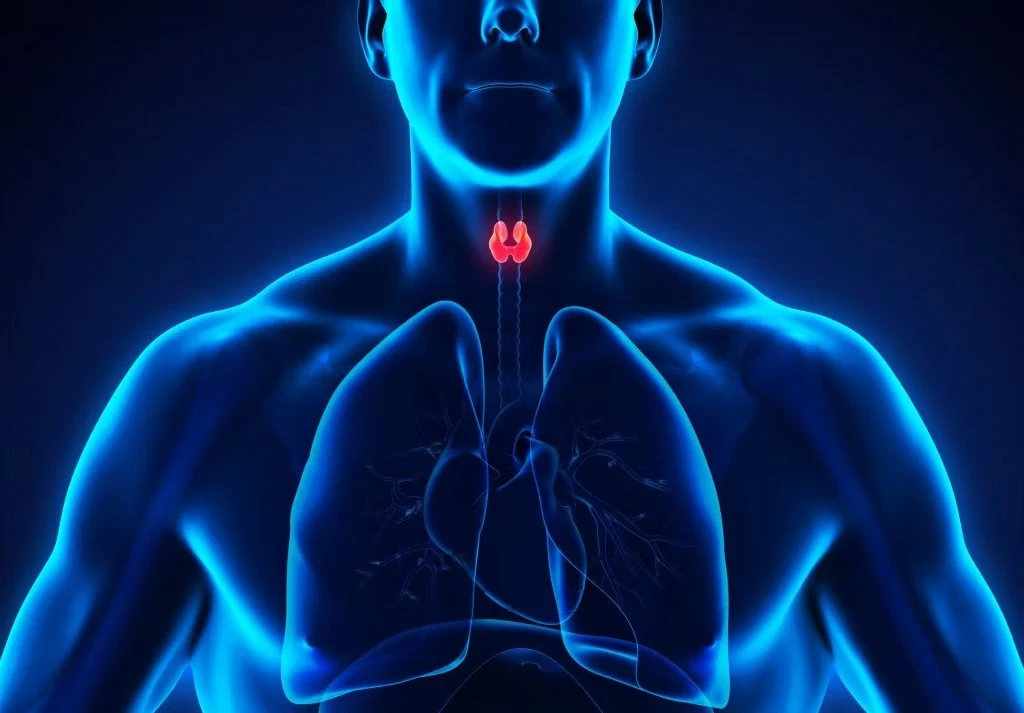
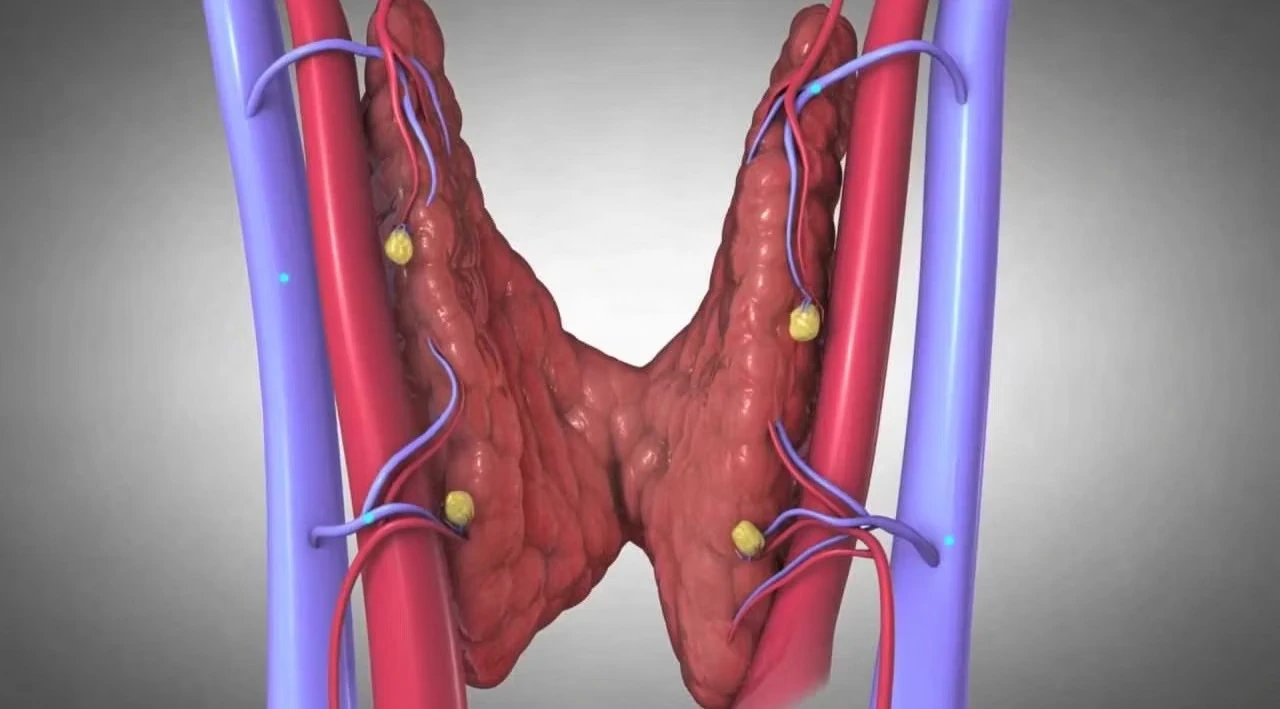
The thyroid and the parathyroids are glands that secrete hormones. The thyroid is located at the base of the neck, in front of the trachea and below the larynx. It is made up of two lobes joined by an isthmus (giving it a butterfly shape). There are 4 parathyroid glands, two located behind each thyroid lobe.
Thyroid conditions are generally easy to treat. Treatments are medical and surgical, and lifelong medical hormone treatment is sometimes necessary. Thyroid surgery and parathyroid surgery are now considered simple, standardised operations.
Indications for parathyroid surgery:
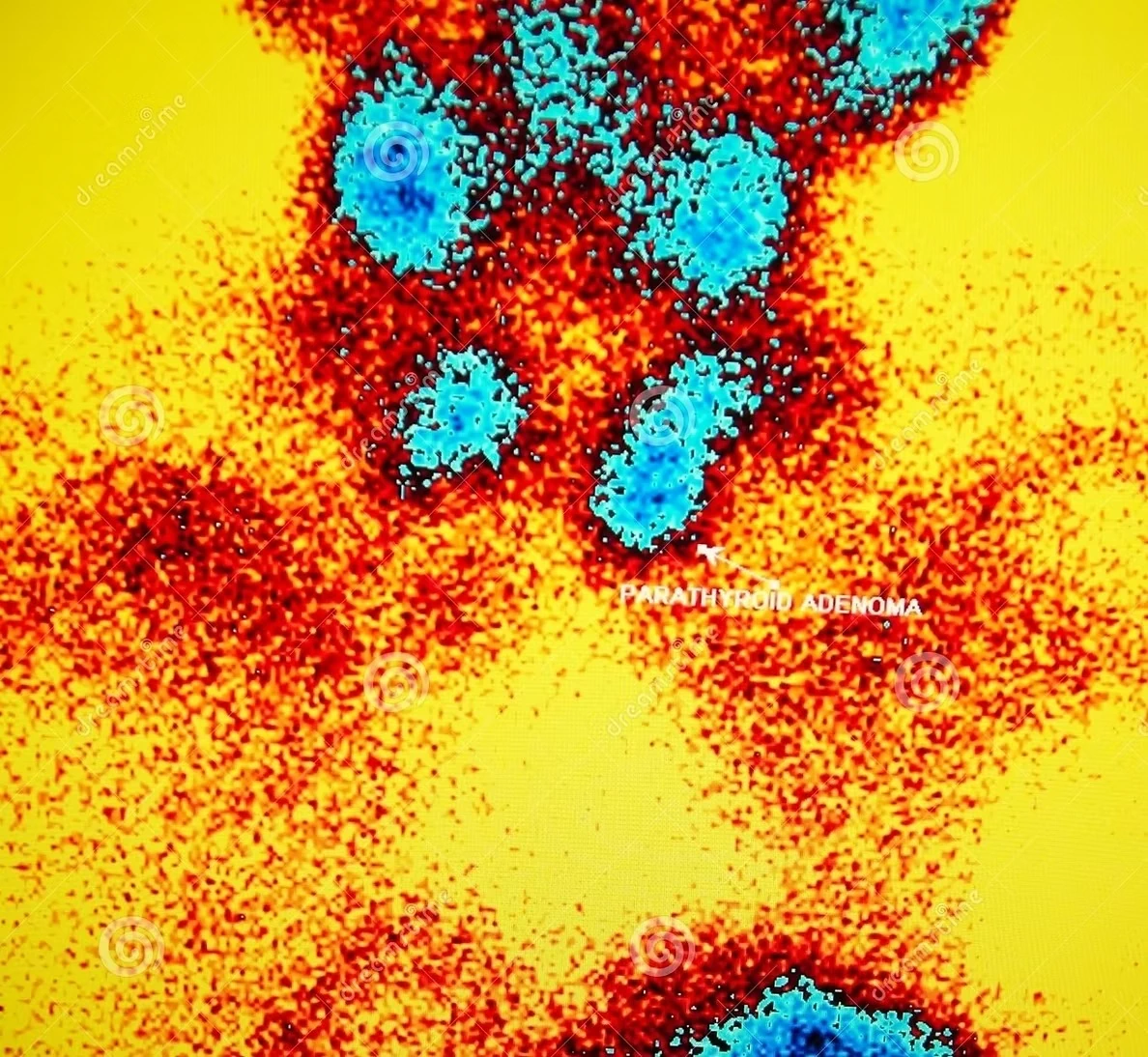
- Parathyroid adenoma.
- Parathyroid hyperplasia.
- Parathyroid cancer (very rare).
The scar
The skin is closed with staples: half of them are removed as early as the next day and the rest on the following day. In our experience, this technique gives the best cosmetic results. The scar is then left uncovered, without a dressing.
A few simple precautions help the scar to heal well:
Avoid getting the scar wet for 10 days, or dry it quickly if it comes into contact with water
Avoid sun exposure for several months; if exposed, apply a high-protection sunscreen
Once the wound has fully healed, local massage may improve the cosmetic result
It is common for a slight ridge to appear at first; this is completely normal. At around nine months, the scar is reduced to a fine, barely noticeable white line.
Functional recovery
Temporary discomfort when swallowing may be noticed in the early days. Pain remains moderate, comparable to that of a sore throat, and is relieved by the painkillers prescribed on discharge.
A drop in calcium: a sign of cure
After a thyroidectomy, it is common for the blood calcium level to fall temporarily. This may show up as tingling in the fingers, the toes or around the mouth, or even cramps in the hands. When these signs appear, they simply indicate that the operation has achieved its goal.
Treatment with calcium tablets, and sometimes vitamin D, will be prescribed for a period tailored to each patient, and adjusted according to clinical progress and laboratory results.
Post-operative follow-up
All your prescriptions will be given to you before you leave, together with a prescription for a blood test to be carried out three weeks after the operation, to check your calcium and thyroid hormone levels. A follow-up consultation with Dr Deroide is scheduled at one month.
1. Post-operative haemorrhage
The most immediate risk is bleeding, which may occur in the minutes or hours following the operation. This complication does not pose a major danger provided it is detected and treated promptly. This is why close monitoring is provided in the recovery room, sometimes for several hours. If necessary, the patient is taken back to the operating room so that the surgeon can control the bleeding.
2. Voice problems
A change in the voice (altered tone, a husky or weakened voice) may occur if one or both of the recurrent nerves, which control the movements of the vocal cords, are injured. These very fine nerves run along the thyroid and receive constant attention throughout the operation. Despite all the surgeon’s precautions, damage to them remains possible in exceptional cases.
Fortunately, this complication is temporary in the vast majority of cases. Recovering a normal voice may nevertheless take several months, require speech therapy sessions and, in very rare situations, further surgery on the vocal cords or the trachea.
3. Failure to cure
In about 2% of cases, the parathyroid disease may persist if the affected gland could not be located during the operation, particularly when it is in an unusual position, in the chest or very high in the neck. Repeat surgery or additional treatment may then be considered.
4. Associated thyroid surgery
In some situations, a cure requires removing part of the thyroid, when the diseased parathyroid gland has become embedded in it. The surgeon will inform you if this possibility arises.